

Improving Node Health
Two of the most important node health risks are sustained saturation and resource imbalance across nodes.1. CPU and Memory Saturation
CPU and memory saturation occur when utilization remains very high for prolonged periods.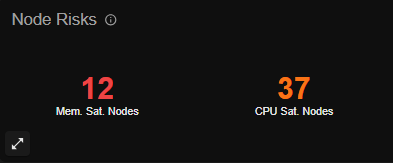
Figure: Node Risk Summary
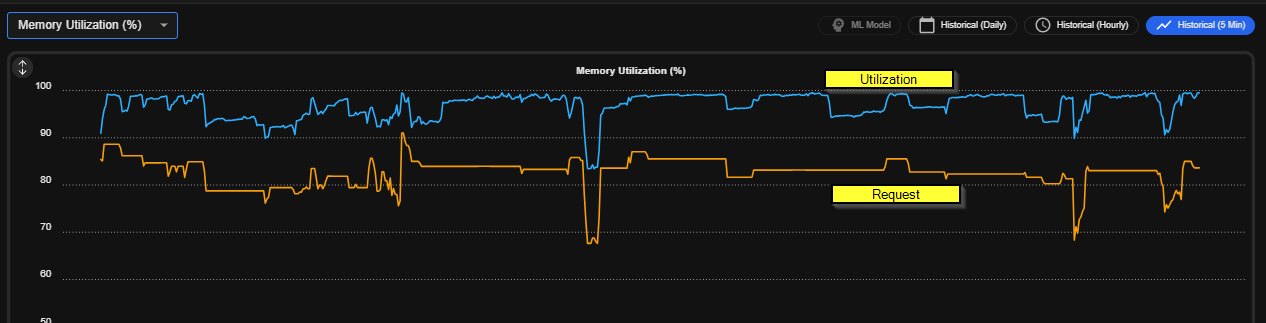
Figure: High Node Memory Usage
- Mismatch between configured requests and actual workload usage
- Missing CPU or memory requests and limits
- CPU saturation can cause throttling and degrade application performance
- Memory saturation can cause OOM kills and workload instability
Recommended Action
Apply Kubex recommendations for containers to better align requests with actual usage and reduce saturation risk. For the most efficient and hands-off execution path, use Kubex automation to apply approved recommendations at scale. See Automation Overview2. High CPU and Memory Balance Ratios
High CPU and memory balance ratios indicate uneven usage across nodes. Some nodes are heavily loaded while others remain underutilized. This is commonly caused when container requests and actual usage are not aligned. A high imbalance can destabilize the environment by increasing contention on busy nodes while wasting capacity on underused nodes.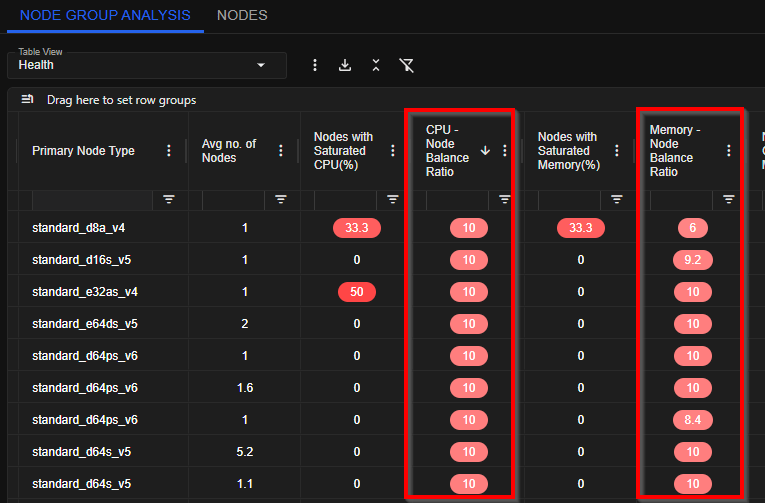
Figure: High Node Memory Usage